
This is not a typical Tatras Industrial post, but a lot of how we think, prepare, and operate does not come from a boardroom. It comes from environments that test decision-making in a much more direct way.
This year, Michal and Oskar travelled to the Barkley Marathons an event often described as one of the most extreme and secretive endurance races in the world. The format is famously unforgiving: no marked course, no GPS, hidden books instead of standard checkpoints, and a route that depends as much on navigation and judgment as it does on endurance. The draft describes it as something that looks structured on paper, but becomes something very different once it begins.
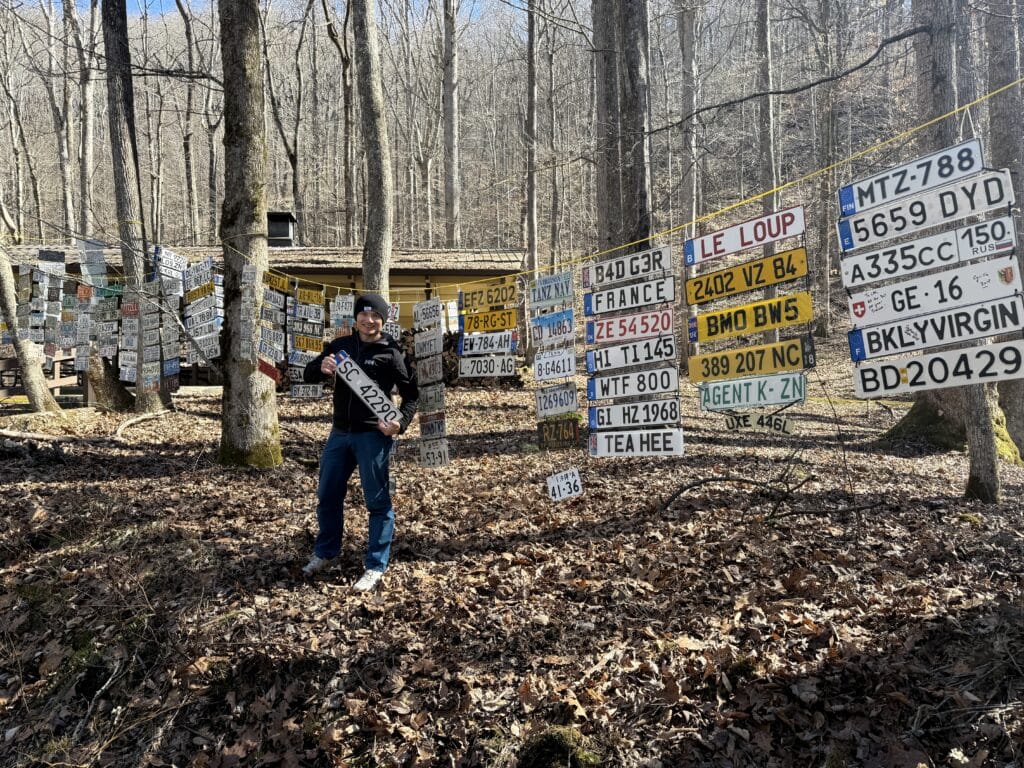
The Barkley isn’t just interesting to us because of the immense physical challenge. It’s truly compelling for how vividly it demonstrates the rapid accumulation of small issues.
Everyone starts with a plan. You pore over the map, you mentally trace the route, you prepare with as much care as you can. Yet, as soon as things begin to move and change, the gap between that carefully made plan and what’s actually happening becomes strikingly clear. A missed turn, a slight course correction, a few minutes lost here and there—each of these might seem minor by itself, but together, they steadily compound. As we’ve noted internally, the Barkley doesn’t typically defeat someone with one monumental error, but rather through a continuous buildup of smaller ones.
This particular insight resonates deeply with us.
In our industrial projects, especially the intricate ones we handle at Tatras, major failures rarely appear out of nowhere. More often, the issues begin as subtle shifts. Perhaps access to a site isn’t quite as anticipated, or maintaining the planned sequence becomes unexpectedly complex. Sometimes, conditions introduce new variables that weren’t apparent at the outset. On their own, these individual occurrences are usually manageable. However, if they aren’t identified and addressed promptly, they start to interact, creating a compounding effect. Our internal analysis echoes this: minor delays and misjudgments, when left unaddressed for too long, can fundamentally alter an entire project.
This is precisely why we put such a high premium on clarity.
Whether we’re tackling jobs in rope access environments, navigating confined spaces, or managing projects with tight operational limits, our role isn’t merely to carry out tasks. It’s fundamentally about spotting when something starts to diverge from the plan and acting decisively before it evolves into a significant problem. We don’t simply wait for perfect clarity to somehow emerge; we actively work to establish it.
This particular mindset is why experiences like the Barkley truly resonate with us. They strip away all the layers. There’s no extraneous noise, no space for distractions, and no one else is stepping in to make decisions for you. We’ve often reflected that such environments are where everything non-essential simply falls away, leaving only what genuinely matters visible.
For Michal and Oskar, the journey to the Barkley was a deeply personal one. Yet, it also mirrors a fundamental aspect of how we operate as a company.
We certainly value thorough preparation, but we also understand that it’s merely the initial step. What holds equal importance is your reaction when conditions inevitably shift—how rapidly you can adapt, and how clearly you can think when your initial plan no longer aligns with the unfolding reality.
This principle holds true whether you’re navigating mountains or overseeing industrial projects.
What we took away from this experience wasn’t primarily about statistics or final results. Instead, it was a potent reminder that control is seldom lost in one sudden moment. More often, it erodes gradually, through a series of minor issues that are left unattended for too long. The most effective teams, we’ve found, are those that can identify this subtle shift early on and intervene before it escalates.
That’s a lesson well worth integrating into our practice.
At Tatras Industrial, we apply this very mindset to every project we undertake: striving for clarity, adapting quickly, and preventing small issues from escalating. If you’re currently planning a complex industrial project in BC, we encourage you to reach out to Tatras Industrial to begin a discussion.